How to Design a Services Page That Actually Books Clients
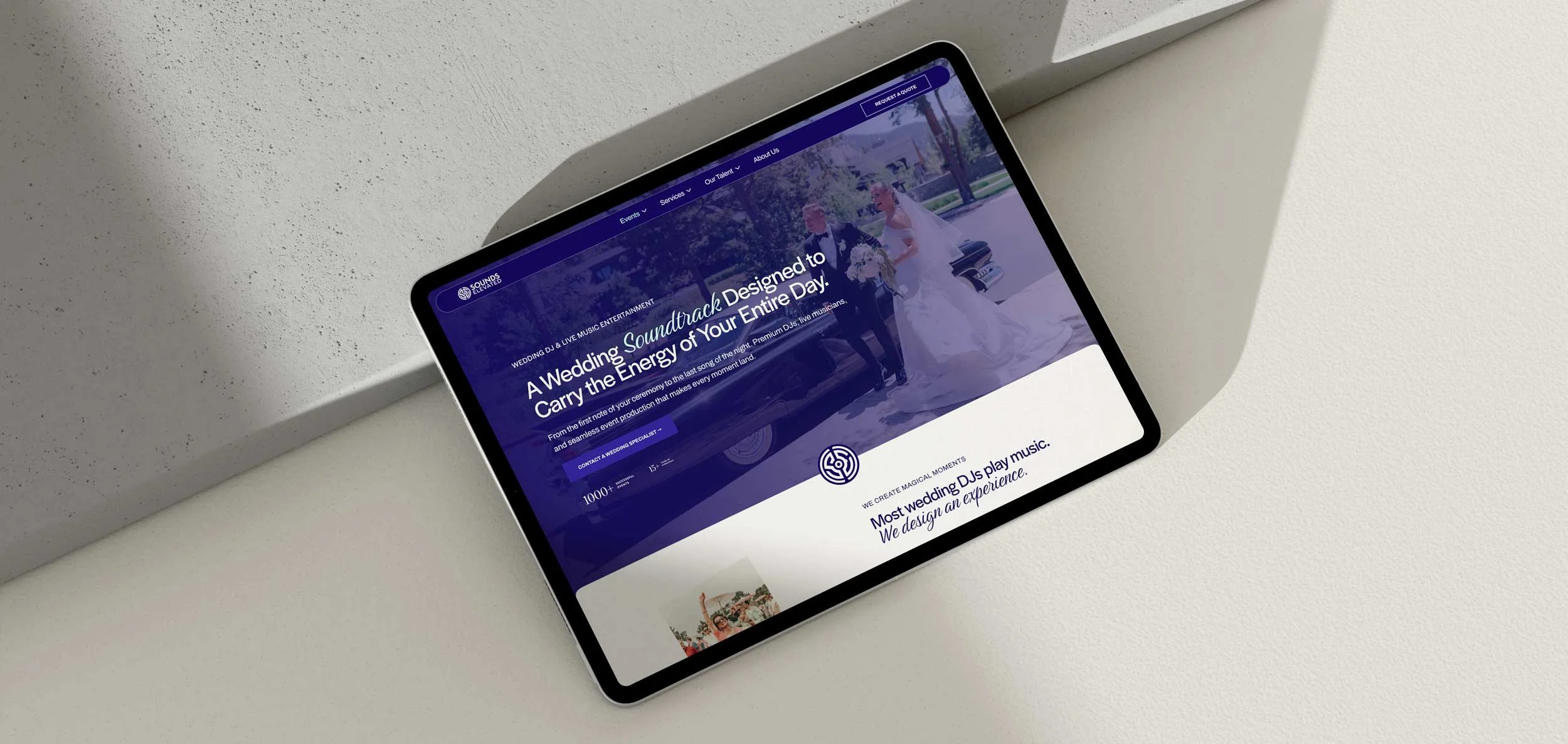
Most services pages have the same problem. They describe what a business does, list a few bullet points, and then stop. No real direction. No reason to stay. No obvious next step.
That is not a services page. That is a brochure.
A services page that actually works does something different. It takes someone who is curious and moves them toward confident. It answers the questions they are already asking before they think to ask them. And it makes reaching out feel like the natural next move, not a leap of faith.
Here is how to get there.
01 // Start with a headline that earns attention
The first thing your services page needs to do is confirm that the visitor is in the right place. That means a headline that is direct, specific, and written in language your ideal client actually uses.
Not "solutions for modern businesses." Not "work with us." Something that tells them immediately what you do, who you do it for, and why it matters.
If someone lands on your page and has to read three paragraphs before they understand what you offer, you have already lost them. Especially on mobile, where most of your
02 // Write for one person, not everyone
A services page performs better when it speaks to a specific audience. The more directly your copy reflects the situation of the person reading it, the more relevant and convincing it becomes.
That means naming the problem they are trying to solve. Describing the outcome they actually want. Using the words they would use, not the words your industry uses.
When someone reads your page and thinks "this is exactly what I need," that is not an accident. That is what happens when you stop writing for everyone and start writing for the right person.
03 // Make it easy to skim
Most people do not read a services page word for word. They scan. They look for headings, short paragraphs, and anything that helps them quickly understand whether this is the right fit.
That means your layout matters as much as your copy. Each service should have its own clear section with a strong heading, a short description, and enough white space to breathe. When a page is visually easy to move through, visitors stay longer and absorb more.
Dense paragraphs and small text are not just a readability problem. They are a trust problem. A page that feels hard to get through signals that the experience of working with you might be too.
04 // Put trust signals where they do the most work
Testimonials, case studies, and examples of your work all reduce hesitation. They show that real people have hired you, worked with you, and gotten results.
But placement matters. A testimonial buried at the bottom of the page does less work than one positioned near the top, close to where a visitor is forming their first impression. And another one near your call to action helps push someone from interested to ready.
You do not need a wall of five-star reviews. You need two or three specific, believable quotes from people who sound like the client you want to attract.
05 // Show them what happens next
One of the quietest reasons people leave a services page without reaching out is uncertainty. They do not know what happens after they click the button. Is it a long form? A sales call? A commitment?
A short process section removes that friction. It does not need to be complicated. Three steps that walk someone from "I reached out" to "we are working together" is enough to make the next step feel approachable instead of unknown.
When the path forward is clear, fewer people hesitate.
06 // Use one call to action, and use it more than once
The goal of your services page is one specific action. Book a call. Request a quote. Send an inquiry. Pick one and build the page around it.
Avoid giving visitors multiple options. When someone has to decide between three different CTAs, they often end up choosing none of them. One clear, repeated prompt is more effective than a menu.
Place it near the top of the page, again after each service or section, and once more at the bottom. Every time someone finishes reading a section and feels ready to move, the next step should be right there.
07 // Answer the questions that create hesitation
Most people who leave a services page without reaching out are not disinterested. They just had a question that went unanswered.
A short FAQ section at the bottom of the page handles that. Use it to address pricing, timelines, what you need from the client, whether you are taking new projects, and anything else that tends to create uncertainty.
Think of it as removing the last barrier between someone who is considering you and someone who is ready to reach out.
08 // Build it with SEO in mind
A services page that no one finds is only doing half its job. Use your primary keyword in the page title, the main headline, and naturally throughout the copy. Keep the structure clean so search engines can read it easily.
If you offer several distinct services, consider giving each one its own dedicated page. That lets you target more specific search terms and creates a better experience for visitors who are looking for something specific. If you want a site built with that kind of structure from the start, explore our strategic web design services.
09 // The thing most services pages are missing
Most services pages are written from the inside out. They describe what the business offers instead of what the client needs to hear.
Flip that. Start with where your client is right now, what they are dealing with and what they are hoping for, and write the page from there. When your messaging reflects their situation, the rest of the page does its job almost on its own.
A services page that books clients is not about having the most information. It is about having the right information, in the right order, with a clear path forward.
That is the difference between a page people read and a page people respond to.